Navigating roundabouts in Europe can be one of the most confusing aspects of driving for visitors, yet mastering them is essential for a smooth and safe journey. Unlike the straightforward four-way stops common in some countries, European roundabouts operate on a principle of continuous flow, where understanding priority rules becomes paramount. The fundamental rule that governs nearly all European roundabouts is simple: vehicles already inside the roundabout have the right of way over those entering. This means that as you approach, you must yield to traffic coming from your left. However, as with many traffic rules, local variations and exceptions add layers of complexity that can catch even experienced drivers off guard.
In countries like France, Spain, and Italy, the standard yield-to-the-left rule applies rigorously. You will typically see a red-and-white triangular yield sign at every entrance, reminding drivers to give way. The flow is generally clockwise in right-hand drive countries, and the key is to watch for gaps in the traffic rather than expecting others to stop for you. It is crucial to signal your intentions clearly—use your right turn signal when exiting, which helps those waiting to enter judge whether they can proceed. Failure to signal is not just frowned upon; in some places, it can lead to fines or frustrating honks from local drivers who rely on these cues for efficient movement.
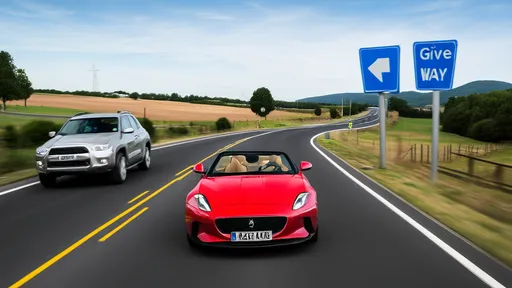
However, not all roundabouts follow the same pattern. In some parts of Europe, particularly in the United Kingdom and Ireland, you might encounter roundabouts where priority is given to vehicles entering the circle. These are less common but often marked with unique signage, such as a "Give Way" line or even traffic lights. For instance, the famous Magic Roundabout in Swindon, England, consists of five mini-roundabouts arranged in a circle, requiring drivers to navigate both clockwise and counterclockwise movements. In such cases, the golden rule is to always obey local road markings and signs, even if they seem to contradict general norms.
Another critical variation involves multi-lane roundabouts, which are prevalent in major cities and on highways. Here, lane discipline becomes as important as yielding. In Germany, for example, approaching a multi-lane roundabout requires you to choose your lane based on your exit: right lane for right turns or going straight, left lane for left turns or U-turns. Cutting across lanes inside the circle is dangerous and illegal. Meanwhile, in countries like the Netherlands, you might find turbo roundabouts with spiraling lane markings that physically guide you to your exit, reducing the need for last-minute lane changes. Misjudging your lane can lead to collisions or missing your turn, so planning ahead is vital.
Pedestrians and cyclists add another layer of complexity to roundabout navigation. In nations such as Denmark and the Netherlands, where cycling culture is deeply ingrained, roundabouts often include dedicated bike lanes that may have their own right-of-way rules. Cyclists might have priority over cars when entering or exiting, marked by shark teeth markings on the road or blue signs. Similarly, pedestrian crossings are frequently located close to roundabout exits, requiring drivers to yield even after they have left the circle. Ignoring these can result in hefty fines and endanger vulnerable road users.
Traffic signs and road markings are your best friends when deciphering roundabout rules. A round blue sign with white arrows indicates an upcoming roundabout, while yield signs or lines on the pavement reinforce who has priority. In some regions, like parts of Belgium, you may see a yellow diamond sign, which grants you priority until you see a similar sign with a black line through it. This system, borrowed from France, can be confusing if you are used to uniform signage. Additionally, in Eastern European countries like Poland, older roundabouts might still operate under outdated rules where entering traffic had priority, though this is increasingly rare. Always look for the most recent signs to avoid assumptions.
Real-world scenarios often test these rules. Imagine approaching a roundabout in Lisbon during rush hour: cars are flowing continuously, and finding a gap seems impossible. Locals might create informal gaps by slowing down, but as a visitor, it is safer to wait for a clear opportunity. Conversely, in rural areas of Greece or Turkey, you might find that fewer drivers adhere strictly to yielding rules, requiring defensive driving and extra caution. Night driving or adverse weather conditions can further obscure signs and markings, making prior knowledge of general and local rules indispensable.
Enforcement and penalties for roundabout violations vary across Europe. In Switzerland and Germany, cameras often monitor roundabouts, and failing to yield can lead to fines exceeding 200 euros. In contrast, in southern European countries like Italy, enforcement might be more relaxed, but the risk of accidents remains high. Rental car companies sometimes brief customers on these differences, but it is ultimately the driver's responsibility to research before hitting the road. Using apps like Google Maps or Waze can provide real-time alerts for complex roundabouts, but they are no substitute for understanding the underlying rules.
In summary, while the basic principle of yielding to traffic inside the roundabout unites most of Europe, the devil is in the details. From the turbo roundabouts of the Netherlands to the magic roundabouts of the UK, each country—and sometimes each city—imparts its own twist. The key to confident driving lies in studying local regulations, watching carefully for signs, and practicing defensive driving. Remember, roundabouts are designed to enhance traffic flow and safety when used correctly. So next time you approach one, take a deep breath, yield to the left, signal your exit, and enjoy the efficiency of European road design.

By /Aug 22, 2025

By /Aug 13, 2025
By /Aug 22, 2025

By /Aug 22, 2025

By /Aug 22, 2025

By /Aug 13, 2025

By /Aug 22, 2025

By /Aug 13, 2025

By /Aug 22, 2025

By /Aug 13, 2025

By /Aug 13, 2025

By /Aug 13, 2025
By /Aug 22, 2025

By /Aug 22, 2025

By /Aug 22, 2025

By /Aug 13, 2025
By /Aug 22, 2025

By /Aug 22, 2025

By /Aug 22, 2025

By /Aug 13, 2025
