The design world has long been enamored with the sleek, unadorned aesthetic of Scandinavian minimalism. For decades, the Nordic approach—characterized by clean lines, muted palettes, and functional simplicity—dominated global interiors, fashion, and even lifestyle branding. But whispers of its decline have grown louder in recent years, as a bold, tactile movement emerges from Iceland’s volcanic landscapes. Dubbed "volcanic ash-dyeing," this ancient-meets-avant-garde technique is redefining luxury, trading sterile perfection for raw, earth-born opulence.
At first glance, the shift feels almost heretical. After all, Nordic minimalism wasn’t just a design trend; it was a philosophy. It promised clarity in a cluttered world, a refuge from excess. Yet, as consumers increasingly crave authenticity and connection to nature, the icy restraint of minimalism has begun to feel, ironically, impersonal. Enter Iceland’s artisans, who’ve turned to the very element that once threatened their communities—volcanic ash—to craft textiles, ceramics, and finishes that pulse with primordial energy. The result? A paradoxical luxury that’s both rugged and refined.
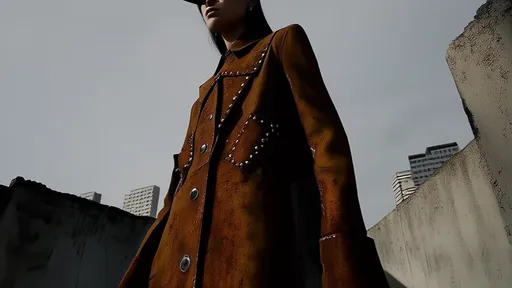
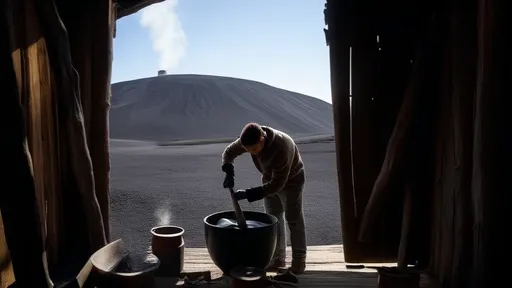
The process itself is alchemy. Harvested from recent eruptions, the ash is meticulously sorted by grain size and mineral content before being fused with organic binders. When applied to fabrics like Icelandic wool or linen, it creates a mottled, smoky patina that no industrial dye can replicate. Each piece tells the story of its origin: the 2010 Eyjafjallajökull eruption might lend a whisper of gunmetal gray, while Hekla’s fiercer outbursts yield deep charcoal veining. This isn’t mass production; it’s geology translated into wearable art.
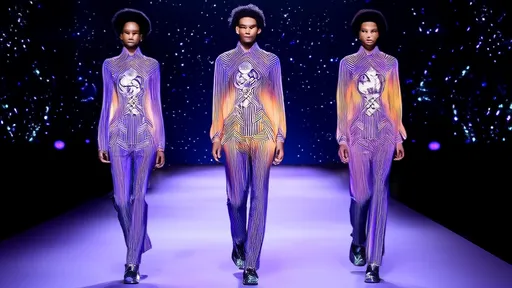
What’s striking is how this trend inverts minimalism’s core tenets. Where Danish design sought to erase traces of the hand, volcanic ash-dyeing celebrates imperfection. Craters become texture, unpredictability is prized, and the "flaws" are the focal points. Designers like Reykjavík-based Hildur Yeoman openly reject the term "minimalist," calling her collections "maximalism in monochrome." Her runway shows feature models draped in gowns that resemble cooled lava flows, their surfaces shimmering with embedded minerals. Critics hail it as "post-apocalyptic elegance"—a harmony of destruction and beauty.
The commercial response has been fervent. Luxury conglomerates, once obsessed with Scandinavian neutrals, are now funding research into volcanic pigments. Parisian ateliers experiment with ash-glazed porcelain, while Milanese furniture houses commission charred-wood tables that mimic Iceland’s moss-covered lava fields. Even tech giants have taken note; last year, a limited-edition smartphone with a "volcanic glass" backplate sold out in minutes. This isn’t just a trend—it’s a recalibration of what we consider valuable. In an age of synthetic everything, rarity is no longer about scarcity alone, but about narrative. Owning a jacket dyed with Fagradalsfjall’s ashes means wearing a piece of the planet’s heartbeat.
Yet, the movement raises provocative questions. Can this resurgence of raw materials coexist with sustainability? Icelandic producers argue yes—their ash is a byproduct of natural events, requiring no additional resource extraction. But as demand grows, so does the risk of commodifying geological trauma. After all, these eruptions displaced families, paralyzed air travel, and altered ecosystems. Some designers, like the collective VON, address this tension head-on, donating profits to communities affected by eruptions. Their tagline: "Luxury shouldn’t just take; it should give back."
Meanwhile, Nordic minimalism isn’t vanishing without a fight. Its proponents argue that true minimalism was never about emptiness, but about intentionality—a nuance lost in commercialization. Perhaps the future lies in synthesis. Already, hybrid styles are emerging: ash-dyed curtains in a Stockholm loft, or a Copenhagen café pairing Arne Jacobsen chairs with basalt-textured walls. The contrast feels invigorating, like geothermal steam meeting frost.
One thing is certain: our definition of luxury is evolving. It’s no longer just about what’s rare or expensive, but about what’s alive. Volcanic ash-dyeing doesn’t offer the controlled serenity of minimalism; it thrums with the chaos of creation itself. In a world exhausted by sanitized perfection, perhaps we’re finally ready to embrace the beauty of what’s wild, untamed, and unapologetically real.

By /Aug 18, 2025

By Amanda Phillips/May 27, 2025
By /Aug 18, 2025

By Sophia Lewis/May 27, 2025

By /Aug 18, 2025
By /Aug 18, 2025
By Rebecca Stewart/May 27, 2025

By /Aug 18, 2025
By /Aug 18, 2025
By Christopher Harris/May 27, 2025
By Joshua Howard/May 27, 2025

By Megan Clark/May 27, 2025
By Daniel Scott/May 27, 2025
By /Aug 18, 2025
By Jessica Lee/May 27, 2025
By David Anderson/May 27, 2025

By /Aug 18, 2025
By /Aug 18, 2025

By Noah Bell/May 27, 2025

By /Aug 18, 2025
